The train from China to Europe (China–Europe rail freight) takes about 14–25 days from a Chinese rail terminal to Poland or Germany, and about 25–35 days door to door to most of Western Europe. That is two to three weeks faster than sea freight and far cheaper than air. Below we explain the routes, the transit times by country, which goods can go by train, and when rail is the right choice in 2026.
Key points
• Rail is the middle option: faster than sea, much cheaper than air, and best for restocks and orders with a fixed deadline.
• Most trains enter the EU at Malaszewicze on the Poland–Belarus border, then continue to hubs such as Warsaw, Lodz, Duisburg and Hamburg.
• Rail carries full containers (FCL) and shared containers (LCL), so a few pallets can go by train too.
• Dangerous goods, many battery products and some restricted goods cannot go by rail. Check before you book.
• In 2026 some sea services returned to the Suez Canal, which shortened sea transit, but rail is still faster to inland Europe.
Rail vs sea vs air to Europe
| Rail freight | Sea freight | Air freight | |
|---|---|---|---|
| Door to door (Germany) | 25–35 days | 40–55 days | 5–10 days |
| Cost per kg | Medium | Lowest | Highest |
| Best for | Restocks and deadline-driven orders | Large volumes, flexible timing | Urgent and high-value goods |
| Load types | FCL and LCL | FCL and LCL | Loose cartons and pallets |
| Carbon footprint | Much lower than air | Lowest per tonne | Highest |
How long does the train from China to Europe take?
| Destination | Main European terminals | Terminal to terminal | Door to door |
|---|---|---|---|
| Poland | Malaszewicze, Lodz, Warsaw | 14–20 days | 20–30 days |
| Germany | Duisburg, Hamburg | 18–25 days | 25–35 days |
| Netherlands / Belgium | Via Duisburg or Tilburg | 20–28 days | 28–38 days |
| United Kingdom | EU terminal, then truck via the Channel | 20–28 days | 30–40 days |
| Italy / Spain / France | Via German or Polish terminals | 22–30 days | 30–40 days |
Door to door includes trucking to the departure terminal in China, export and import customs, and final delivery by truck in Europe. Times are typical and change with border waiting times and the season.
What Rail Freight to Europe Costs
| Method (November 2026) | Typical main freight | Door to door to Germany |
|---|---|---|
| Rail, 40ft container to Duisburg or Malaszewicze | about $4,600–6,600 | 25–35 days |
| Rail LCL | about $170–220 per CBM | 30–40 days |
| Sea, 40ft to Hamburg or Rotterdam | about $3,600–4,100 | 40–55 days |
| Air freight to Germany | about $4.5–6.5 per kg | 5–10 days |
Rail rates are terminal to terminal; trucking in China and Europe, customs and duties are added in a door-to-door quote. Compare the extra freight with what two to three weeks of faster stock is worth to you.
How a rail shipment works
- Pickup in China. We collect from your suppliers and truck the cargo to the departure terminal. South China has regular departures from Dongguan, Guangzhou and Shenzhen, and cargo can also join trains from the large inland hubs.
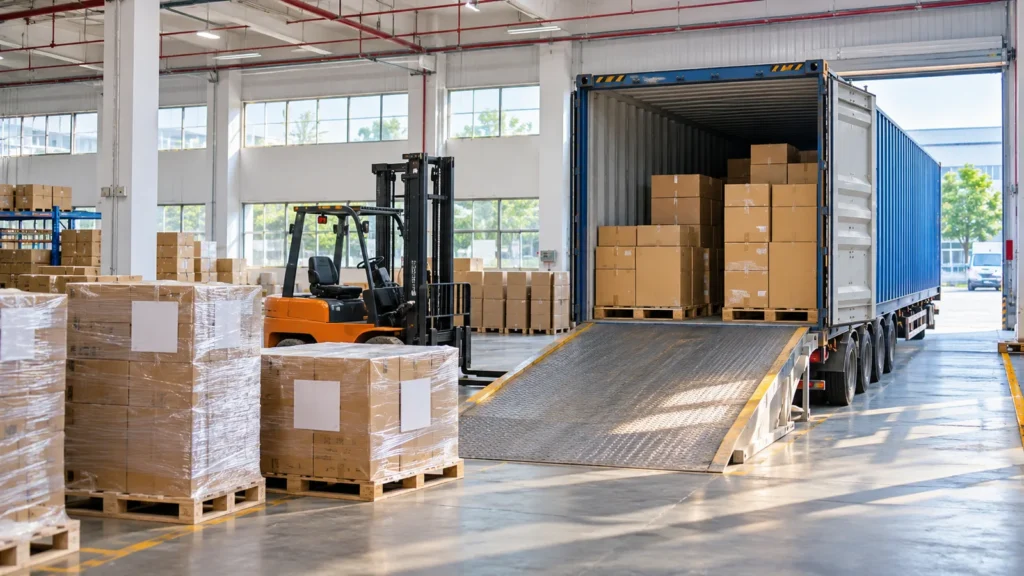
- Export clearance and loading. The goods are declared for export and loaded into a 20ft or 40ft container, or consolidated with other cargo for LCL.
- The journey across Asia. Most trains run through Kazakhstan, Russia and Belarus. At each change of rail gauge the containers are moved to a new train.
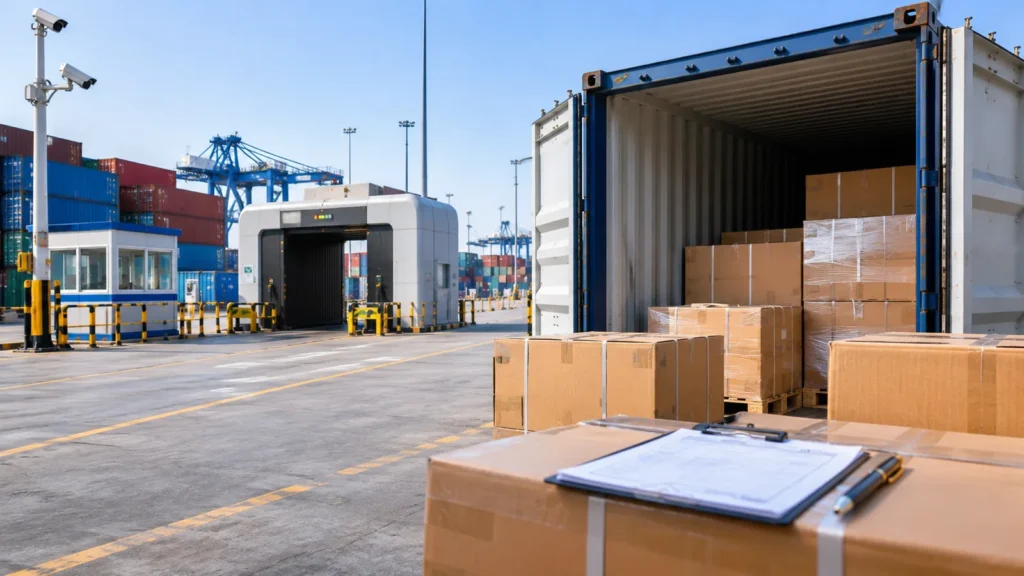
- Entry into the EU. Most trains cross at Malaszewicze in Poland. The advance safety data (ICS2) must be filed before arrival.
- Import clearance and delivery. Customs clearance in the EU or the UK, payment of duty and import VAT, then delivery by truck to your address.
Rail or sea in 2026?
From early 2024, most Asia–Europe container ships sailed around the Cape of Good Hope to avoid the Red Sea, which added about 10–14 days to the voyage and made rail even more attractive. From mid-2026, several large shipping lines started using the Suez Canal again, and sea transit to Europe is getting shorter on those services. The return is still partial and could be reversed.
Even with Suez, rail is usually faster for inland destinations such as Poland, the Czech Republic, Hungary, southern Germany and Austria, because sea cargo still needs a long truck or rail leg from the port. For destinations close to the North Sea ports, such as Rotterdam, Antwerp or Hamburg, sea freight is often the better value if you can wait.
A simple rule: choose rail when you need the goods within about five weeks and air is too expensive. Choose sea when price matters more than time.
What can and cannot go by rail
- Usually fine: machinery and parts, furniture, textiles and clothing, household goods, building materials, auto parts, most electronics without loose batteries.
- Restricted or not accepted: dangerous goods, many lithium battery products, flammable liquids, and some goods covered by EU sanctions or export controls.
- Take care in winter: trains cross very cold regions. Liquids, cosmetics and temperature-sensitive goods may need special packing, or another mode.
- Insurance: some insurers limit cover for routes through Russia and Belarus. Confirm the cover for your cargo before you book.
Not sure about your product? Send us the details and we check whether it can go by rail.
FCL or LCL by rail?
A full container (FCL) is sealed at the factory or our warehouse and travels straight to the European terminal. It is the fastest and simplest option from about 15 cubic metres. For smaller shipments, LCL rail lets you share a container and pay by volume or weight. LCL adds a few days for consolidation in China and unpacking in Europe.
To work out the volume and weight of your cartons, use our freight calculator.
Rail Freight from China to the UK
China to UK rail freight works in two legs. The train runs from China to a terminal in the EU, such as Duisburg or a hub in Poland. From there, containers or pallets continue to the UK by truck and ferry or through the Channel Tunnel. Door to door, rail freight from China to the UK takes about 30–40 days: slower than air, but usually faster than sea freight.
- One booking: we arrange the train, the road leg from the EU terminal and delivery to your address in the UK.
- UK customs: the goods are cleared on arrival in the UK, so the importer needs a UK EORI number and pays UK duty and import VAT. See importing from China to the UK.
- FCL or LCL: full containers and smaller shipments can both go by train. We confirm the routing and transit time for each booking.
Train freight from China to the UK suits goods that are too heavy or too costly for air but need to arrive sooner than by sea. For all options, see shipping from China to the UK.
Documents and EU customs
- Commercial invoice and packing list with accurate values and HS codes.
- Rail waybill, issued by the rail operator.
- An EORI number for the importer in the EU (or a UK EORI for Britain).
- Advance cargo information under ICS2, filed by the carrier or forwarder before the train reaches the EU.
- Product certificates where needed, for example CE marking for machinery and electronics.
On arrival you pay EU import duty and VAT, or UK duty and VAT. If you prefer one price with duty included, ask for DDP. See DDP vs DAP vs EXW for who pays what.
Checklist Before You Book Rail
- Confirm the product can go by rail (no dangerous goods or restricted battery products).
- Check insurance cover for the route.
- Decide FCL or LCL from your total CBM and weight.
- Have the EU or UK EORI number ready for import.
- Send accurate invoices and HS codes so the ICS2 data can be filed on time.
- For winter shipments, check whether the goods need protection from cold.
- Agree who pays duty and VAT, or ask for DDP.
Is rail right for your shipment?
Rail is usually a good fit if your goods are going to central or eastern Europe, you need them within four to five weeks, and the cargo is not dangerous or battery-powered. Tell us the product, volume and delivery address, and we will compare rail, sea and air for you. Get a rail freight quote, or read more about our rail and road freight service and shipping from China to Europe.
Frequently asked questions
How long does rail freight from China to Europe take?
About 14–20 days terminal to terminal to Poland and 18–25 days to Germany. Door to door to most of Western Europe it takes about 25–40 days.
Is rail freight cheaper than air freight?
Yes, usually by a wide margin. Rail costs more than sea freight but much less than air, which is why it is often used for restocks that cannot wait for a ship.
Can I ship a few pallets by rail?
Yes. LCL rail services carry shared containers, so you pay only for the space your pallets or cartons use.
Does China–Europe rail go to the UK?
Yes. Trains run to terminals in the EU. From there, containers or pallets continue to the UK by truck and ferry or the Channel Tunnel, about 30–40 days door to door.
How much does rail freight from China to Europe cost?
In November 2026, a 40ft container costs about $4,600–6,600 terminal to terminal, and LCL about $170–220 per CBM. That is more than sea freight but far less than air.
What is ICS2?
The EU’s advance cargo information system. Safety and security data for the shipment must be filed before the goods reach the EU, usually by the carrier or forwarder.
Can lithium batteries go by rail from China to Europe?
Often not. Many rail operators restrict or refuse battery products. Send us the product details and battery specifications, and we check the options.
Checked on November 4, 2026. Rail routes, border conditions and sea schedules change often, so we confirm the routing and transit time for each booking. This guide is general information, not legal or customs advice.
 Scan to add us on WeChat
 WhatsApp +86 152 1895 5440