Importing from China follows the same eight steps whatever you buy: check the product can be imported, find a supplier, check it, agree the price, Incoterm and payment, work out your landed cost, inspect the goods, ship them, and clear customs at home. This guide walks through each step for importers in the USA, the UK, Canada and Europe, with the checks that prevent the most expensive mistakes and links to our detailed country guides.
Key points
• Check import rules, certification and duty for your product before you order, not after the goods are made.
• Find suppliers on Alibaba, 1688, at trade fairs, in markets such as Yiwu, or through a sourcing agent, and check them before paying a deposit.
• A common payment pattern is a 30% deposit and the 70% balance once the goods are ready, often against a copy of the bill of lading.
• Work out the landed cost: product price + freight + duty + import VAT or sales tax + local charges and delivery.
• You are the importer: you need the right customs registration in your country, and someone must file the customs entry.
How to Import from China in 8 Steps
From product idea to goods in your warehouse
Steps JIEYI can handle for you Your decisions
Step 1: Check the Product Can Be Imported
Before you contact a single supplier, check four things for your product in your own country:
- Is it restricted or banned? Some goods need a licence or cannot be imported at all, for example certain chemicals, weapons, some food and plant products, and counterfeit goods.
- Which certificates and markings are required? Electrical goods, toys, cosmetics, children’s products and anything that touches food usually need testing and marking, such as CE and UKCA in Europe and the UK, or FCC and CPSIA requirements in the USA. The supplier’s certificate must be valid for your exact product.
- What is the duty? Find the HS code and check the duty rate, including any extra tariffs or anti-dumping duty on goods from China. See how to find the HS code.
- Is it special cargo? Batteries, liquids, powders and magnets have extra shipping rules. See shipping batteries from China.
Also check trademarks. Goods with brand names, logos or characters you do not have a licence for can be seized by customs.
Step 2: Find Suppliers in China
| Where | Good for | Watch out for |
|---|---|---|
| Alibaba.com | Finding manufacturers that export, in English | Many listings are trading companies; prices shown are often a guide only |
| 1688.com | Chinese domestic prices and a very wide range | In Chinese; most suppliers do not handle export |
| Trade fairs (e.g. the Canton Fair) | Meeting many suppliers and seeing products in person | Held on set dates; travel needed |
| Yiwu market | Many small goods in small quantities | Quality varies between booths |
| Sourcing agent | Someone in China to find, check and manage suppliers | Agree in writing what the agent does and how it is paid |
Contact several suppliers for the same product. Send the same clear specification to each, including materials, size, colours, packaging, quantity and destination, so the quotes can be compared.
Step 3: Check the Supplier and Get Samples
- Business licence. Ask for it and check the company name matches the name on the quote, the contract and the bank account you will pay.
- Factory or trading company. Both can be fine, but you should know which one you are dealing with. A factory visit or a video call from the production line helps.
- Export experience. Ask which countries it ships to and whether it can provide the certificates you need.
- Samples. Pay for samples, check them carefully, and keep an approved sample as the standard the bulk order must match.
Step 4: Agree Price, Incoterm and Payment
Ask what the price includes. A price “ex works” (EXW) covers only the goods at the factory; FOB includes delivery to the ship at a Chinese port; DDP covers everything to your door. The term changes your total cost, so compare suppliers on the same basis. See Incoterms 2020 explained and FOB vs EXW.
Common payment terms with Chinese suppliers:
- Deposit and balance by bank transfer (T/T): often 30% when you order and 70% when the goods are ready, after inspection, or against a copy of the bill of lading. See bill of lading explained.
- Letter of credit (L/C): safer for larger orders, but with bank fees and strict paperwork.
- Trade Assurance or platform payment: for orders placed on a platform that offers it.
Put the details in a written purchase order: product specification, quantity, price, Incoterm, packing and carton marks, ready date, payment terms and what happens if the goods do not match the sample.
Step 5: Work Out Your Landed Cost Before You Order
The product price is only part of the cost. The landed cost is what you pay to get the goods into your warehouse:
Landed cost = product price + freight and insurance + duty and tariffs + import VAT, GST or sales tax + customs, port and delivery charges.
Example (for illustration only, UK import with example rates). Goods cost $8,000 FOB Shenzhen. Sea freight and insurance to the UK are $1,000, so the customs value is $9,000. With an example duty rate of 4%, duty is $360. Import VAT at 20% is charged on $9,360, which is $1,872; a VAT-registered business can usually reclaim it. Add the customs entry, port charges and delivery from the port.
Each country works out duty differently: the USA charges duty on the price paid for the goods without international freight, the UK and the EU include freight and insurance, and Canada uses the value when the goods were shipped. Use our country guides for the exact rules:
- Importing from China to the USA and US tariffs on Chinese goods
- Importing from China to the UK
- Importing from China to Canada
Step 6: Inspect the Goods Before You Pay the Balance
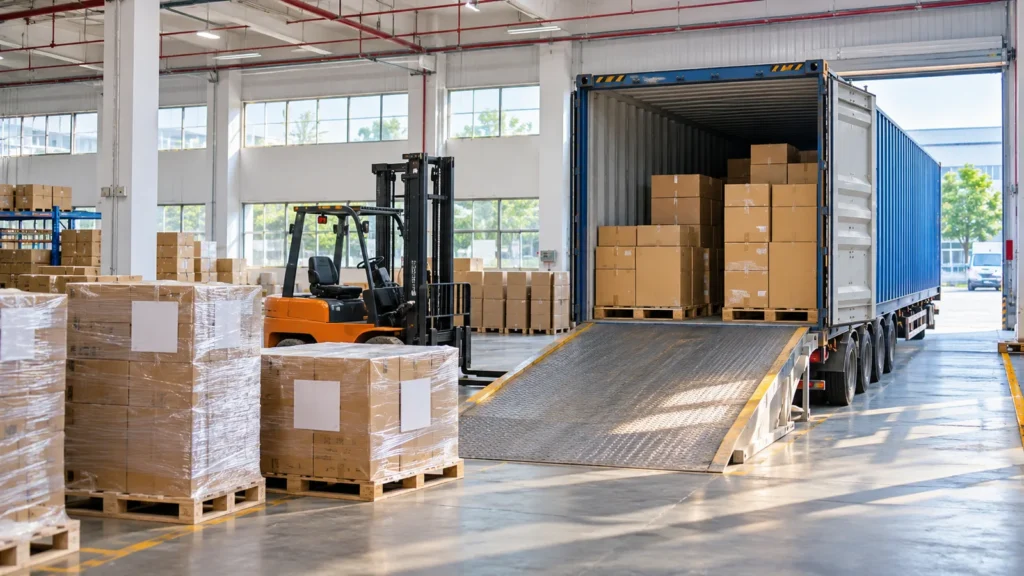
Problems found in China can still be fixed; problems found after delivery usually cannot. A pre-shipment inspection checks a random sample of the finished goods against your specification and approved sample, along with the quantity, packing, cartons and labels, and reports back with photos before you pay the balance. See quality control and inspection in China.
Step 7: Ship the Goods
| Shipment | Usually best | Door to door (about) |
|---|---|---|
| Samples, under about 20 kg | Express courier | 3–7 days |
| About 100–500 kg, urgent | Air freight | 5–10 days |
| About 2–15 CBM | Sea freight LCL (shared container) | 30–60 days |
| About 15 CBM and more | Sea freight FCL (full container) | 25–55 days |
| Europe, between air and sea | China–Europe rail | 25–35 days to Germany |
Work out your volume first with how to calculate CBM, then see air freight vs sea freight and LCL vs FCL. If you buy from several suppliers, consolidating them into one shipment saves fixed costs; see China consolidation services. If you sell on Amazon, see how to ship from China to Amazon FBA.
Step 8: Clear Customs, Pay Duty and Receive the Goods
| Country | You need | Taxes at import |
|---|---|---|
| USA | Importer number (usually your EIN) and a customs broker; ISF filing for ocean shipments; a customs bond for shipments over $2,500 | Duty plus Section 301 and other tariffs; no duty-free de minimis for goods from China |
| United Kingdom | GB EORI number | Customs duty plus import VAT (20% standard rate) |
| Canada | Business Number with an import-export account and a CARM account | Customs duty plus 5% GST |
| European Union | EORI number in an EU country | Customs duty plus import VAT at the rate of the country |
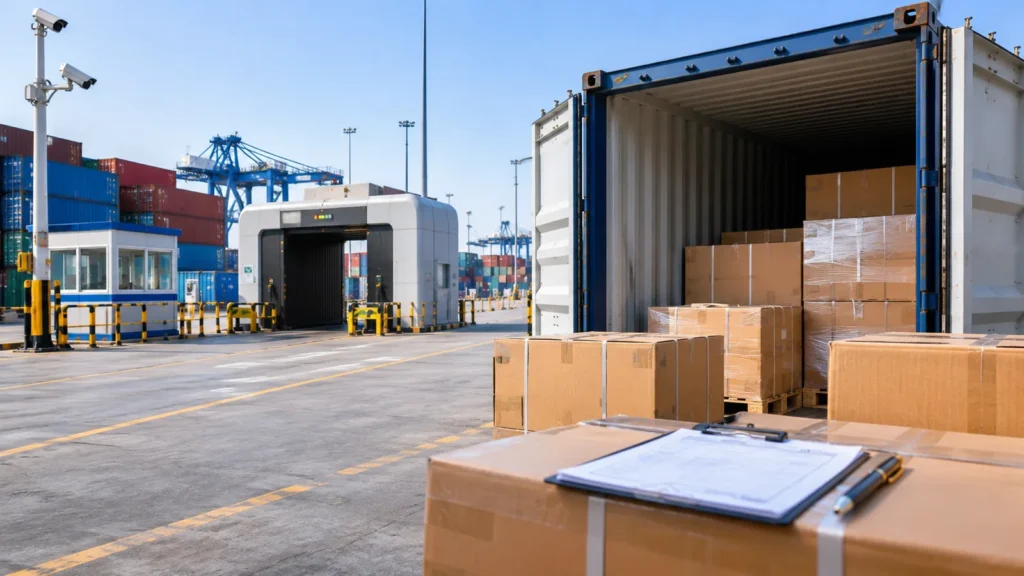
A customs broker or your forwarder files the customs entry with the commercial invoice, packing list and bill of lading or air waybill. Have them ready before the goods arrive to avoid storage and demurrage charges. If you prefer not to handle import customs yourself, DDP shipping gives you one price to your door with duties included.
What Is Worth Importing from China?
China makes almost everything, but some products are easier to import profitably than others.
- Usually easier: products that are light and compact, not fragile, without batteries or strict certification, and with a clear price gap between the factory price and your selling price, for example many home goods, accessories, packaging, tools and textile products.
- Usually harder: branded or character goods, food, cosmetics and medical products, electrical goods without valid certificates, very heavy or bulky low-value goods, and anything with a high duty or anti-dumping duty in your country.
Always add freight and duty to the factory price before you decide; a product that looks cheap can lose its margin once landed.
Do You Need an Import Agent in China?
You can import from China on your own, especially if you buy from one supplier you already trust. An agent in China helps most when you:
- buy from several suppliers and need someone to follow all the orders;
- cannot visit China to check suppliers and goods yourself;
- want inspection, payment to suppliers and shipping handled by one team.
How JIEYI Helps You Import from China
We are a freight forwarder and sourcing agent in Dongguan. We can find and check suppliers, including in Yiwu, follow your orders, arrange inspection before shipment, pay your suppliers once you approve the goods, consolidate orders at our warehouse in Guangdong, and ship by sea, air, express or rail to the USA, Canada, the UK and Europe, with DDP and Amazon FBA options. You can use one service or all of them.
Tell us what you want to import and we will suggest the steps and quote the parts you need.
How to Import from China: FAQ
How do I start importing from China?
Check that your product can be imported and what duty applies, register as an importer in your country, find and check suppliers, order samples, agree the price, Incoterm and payment, then arrange inspection, shipping and customs clearance.
Do I need a licence to import from China?
Most goods do not need a special licence, but you need a customs registration as an importer, such as an EORI number in the UK and EU, a Business Number in Canada, or an importer number in the USA. Some products need permits or certificates.
How much does it cost to import from China?
Add the product price, freight, duty and tariffs, import VAT or sales tax, and customs, port and delivery charges. Freight and duty often add a large share to the product price, so work out the landed cost before you order.
How do I pay a Chinese supplier safely?
Pay only to a company bank account in the supplier’s registered name, keep the deposit as low as you can, and pay the balance after inspection or against a copy of the bill of lading.
What is a China import agent?
A company or person in China who finds and checks suppliers, follows orders, checks the goods and often arranges shipping for overseas buyers. Agree in writing what the agent does and how it is paid.
Is it cheaper to import from China with DDP?
Not always, but DDP gives you one price that includes freight, customs clearance, duty and delivery, so there are fewer surprises. Compare it with the landed cost of shipping FOB or EXW and clearing customs yourself.
If you order from Alibaba or 1688, read how to ship from Alibaba for pickup, consolidation and shipping options.
Buying a car? See import a car from China for export licences, shipping options and import duties.
Checked on October 27, 2026. Rules and tax rates change; check your country’s customs authority or a licensed customs broker for your product. This guide is general information, not legal or customs advice. Ask us about importing your product from China.
 Scan to add us on WeChat
 WhatsApp +86 152 1895 5440